Car Wax
- Typical Lifespan: A few weeks to a few months
- Physical Impact Protection: Minimal
- Gloss Enhancement: Moderate
- Maintenance Required: Frequent reapplication
- Water Repellency: Short-term
If you have been researching ways to protect your car's finish, you have likely come across ceramic coating more than once. Automotive Elegance serves drivers throughout Andover, MA with professional ceramic coating services, and this guide explains exactly what the product does, what it does not do, and whether it makes sense for your vehicle.
In simple terms, ceramic coating creates a thin, protective layer on top of your car's paint. This layer improves water repellency, helps resist certain environmental contaminants, adds depth and gloss to the finish, and makes routine washing easier. It is not a miracle shield, but for many vehicle owners it is a practical way to keep a car looking newer for longer.
Vehicle owners typically start looking into ceramic coating after noticing water spots, fading, or the extra time spent scrubbing dirt off their paint. Understanding what the product can realistically accomplish is the first step toward deciding if it is worth the investment.
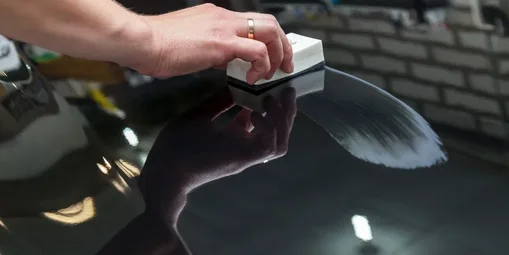
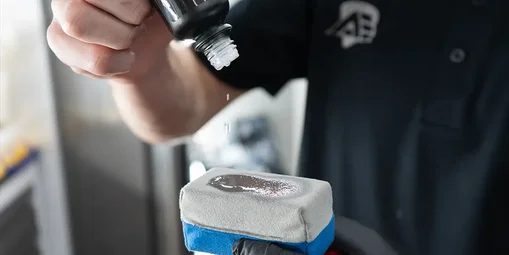
Ceramic coating is a liquid product, most commonly based on silicon dioxide (SiO2), that is applied by hand to a properly prepared vehicle surface. Once cured, it bonds to the clear coat and forms a semi-permanent layer that sits on top of the paint rather than wearing away like wax.
The science behind this comes down to the coating's hydrophobic properties. Water does not spread across a ceramic-coated surface the way it does on bare paint. Instead, it forms tight beads and rolls off, carrying loose dirt and grime along with it. This is why coated cars often look cleaner between washes and why rinsing them tends to take less effort.
Proper surface preparation matters a great deal here. Any swirl marks, light scratches, or contamination left on the paint before application will be sealed in by the coating, not removed by it. That is why professional application, including thorough washing, decontamination, and sometimes paint correction, plays such a large role in the final result.
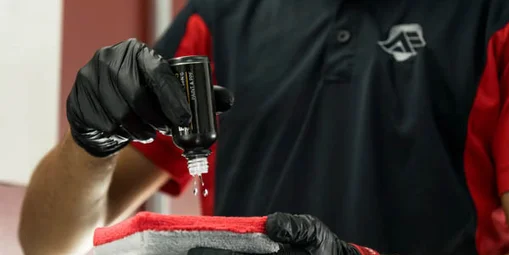
Ceramic coating helps a vehicle withstand several types of everyday exposure, though the exact level of protection depends on the specific product used and how well it was applied. It is important to understand the limits of this protection. Ceramic coating does not make paint immune to staining, oxidation, or fading, and it will not stop every type of contaminant from leaving a mark if it is left on the surface too long.
Bird droppings, tree sap, and road grime are less likely to bond directly with the paint, which gives you more time to clean them off before they cause lasting damage.
The coating adds a layer of resistance against certain acidic and chemical contaminants that can otherwise etch into a clear coat over time.
Many coatings offer some resistance to UV-related fading, though the degree of protection varies by product and should be verified against the manufacturer's documentation.
Because the surface is smoother and more hydrophobic, dirt has a harder time sticking, which simplifies regular washing.
Beyond protection, ceramic coating offers a handful of practical advantages that owners notice in day-to-day use. These benefits add up over time, particularly for owners who keep their vehicles for several years or who care about resale value.
This is one of the most common misconceptions about the product, so it is worth addressing directly. Ceramic coating is not scratchproof, and it does not provide meaningful protection against rock chips, deep scratches, or impact damage. The coating is a thin, hard layer, which means it can actually be more prone to fine scratching in certain conditions than a flexible film.
Paint protection film serves a different purpose. It is a thicker, physical barrier designed to absorb impacts from rocks, road debris, and minor abrasions, and some versions even have self-healing properties that allow light swirls to disappear with heat. Ceramic coating and paint protection film are not interchangeable. Many vehicle owners choose to combine both, using film on high-impact areas like the front bumper and hood, with coating applied over the rest of the vehicle for gloss and easier maintenance.
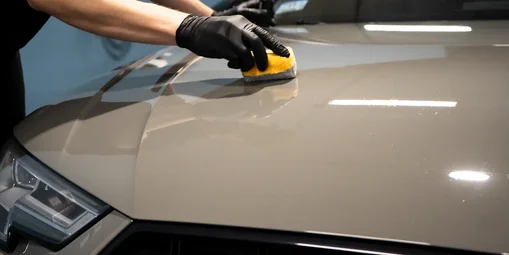
Each of these three options serves a different purpose, and understanding the differences helps clarify which one, or combination, fits your needs. Wax is the most affordable and easiest to apply at home, but it wears off quickly. Ceramic coating offers a longer-lasting shine and easier maintenance. Paint protection film is the only option of the three built specifically to absorb physical impacts like rock chips.
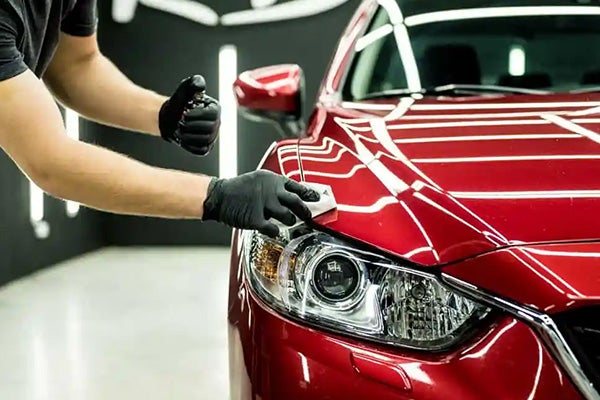
The lifespan of a ceramic coating depends on several factors working together. The specific product used plays a major role, as professional-grade coatings are typically formulated to last longer than consumer-grade options. Surface preparation and application quality matter just as much. A coating applied over a poorly cleaned or uncorrected surface will not bond or perform the way it should.
Driving conditions and exposure also affect durability. A vehicle parked outdoors in direct sun or driven frequently on salted winter roads will likely see the coating wear faster than one garaged most of the time. Regular maintenance, including proper washing techniques, helps extend the coating's effective lifespan. Because these variables differ from vehicle to vehicle, it is best to discuss expected durability directly with the technicians applying the product rather than relying on a blanket estimate.

Yes. Ceramic coating reduces how often you need to wash your vehicle and makes each wash easier, but it does not eliminate the need for regular care. Dirt, dust, and contaminants still land on the surface, and leaving them there for extended periods can affect the coating's performance over time.
Routine washing, using techniques appropriate for a coated surface, helps the coating continue to perform as intended. Automotive Elegance can walk you through maintenance expectations specific to the product applied to your vehicle, so you know what to expect in the months and years after service.
Whether ceramic coating makes sense for you depends on what you value most in vehicle ownership. If a glossy, well-maintained appearance matters to you, if you want to spend less time washing your car, or if you live in an area with heavy environmental exposure such as tree sap, bird activity, or road salt, the benefits are likely to outweigh the cost.
On the other hand, if your primary concern is protecting against rock chips and physical damage, paint protection film, either alone or paired with ceramic coating, may be a better starting point. There is no single right answer for every vehicle owner. The best approach is to weigh your priorities honestly and discuss your specific driving habits and concerns with a professional who can recommend the right combination of services.
Automotive Elegance has served local drivers since 1999 and has grown into the largest nationally awarded XPEL service center, with locations in Andover, MA, Londonderry, NH, and Coraopolis, PA. For vehicle owners in the Andover area, this means access to a team that works with ceramic coating and paint protection film every day, backed by over 100,000 customers served.
The team at Automotive Elegance can walk you through which coating option fits your vehicle, explain realistic expectations around durability and maintenance, and help you decide whether pairing ceramic coating with paint protection film makes sense for your situation. Every vehicle is different, and the right recommendation depends on how you drive, where you park, and what you want your car to look like years from now.
If you are ready to learn more about auto ceramic coating in Andover, MA, reach out to Automotive Elegance to schedule a consultation and get a personalized recommendation for your vehicle.
It forms a thin, bonded layer on top of the paint that improves water repellency, adds gloss, and helps resist certain environmental contaminants. It does not alter or repair the paint underneath.
No. Ceramic coating does not meaningfully prevent scratches and can be scratched itself under the right conditions. Paint protection film is better suited for physical scratch resistance.
No. Rock chips come from physical impact, and ceramic coating is not designed to absorb that kind of force. Paint protection film is the more appropriate solution for this concern.
Water beads and rolls off more easily on a coated surface, which reduces spotting, but it is still possible for mineral deposits to form if water is left to dry on the paint for an extended period.
You can wash it, though using techniques suited to a coated surface, such as the proper soap and wash method, helps preserve the coating's performance over time.
Lifespan varies based on the specific product, application quality, and how the vehicle is driven and maintained. It is best to ask about expected durability for the specific coating applied to your car.
Ceramic coating generally lasts longer and requires less frequent reapplication than traditional wax, though wax remains a lower-cost, short-term option for some owners.
For many vehicle owners, yes, particularly those who want easier maintenance and a lasting glossy finish. The value depends on your priorities and how the vehicle is used and stored.