This article will guide you through the various types of window tint films available, helping you understand the differences in performance, durability, and cost to make an informed decision for your specific needs.
When searching for “the best window tinting,” it’s crucial to understand that “best” isn’t a one-size-fits-all answer. The ideal film for you depends on your individual priorities: is it maximum heat rejection, unparalleled UV protection, optical clarity, privacy, aesthetics, or budget? Here’s a breakdown of the primary film types to help you make an informed decision.
Understanding Film Categories (from basic to advanced)
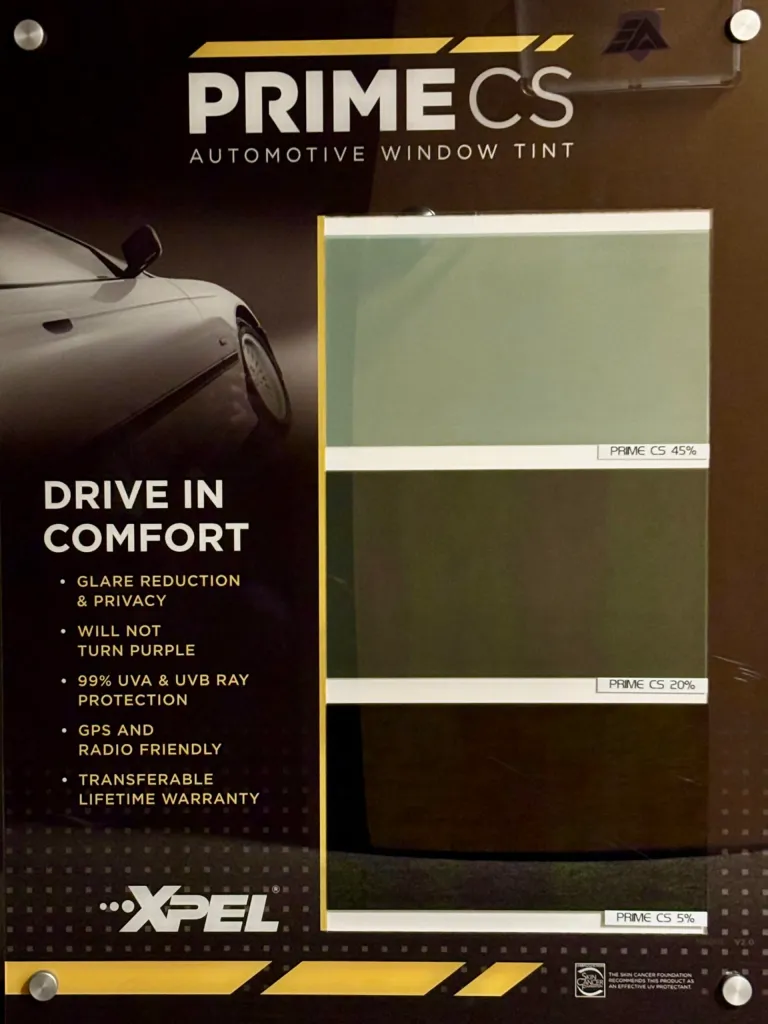
Dyed Film
- Description: This is the most traditional and budget-friendly option. A layer of dye is incorporated into the film to achieve the desired darkness.
- Performance: Primarily offers aesthetic darkening and some glare reduction. Its heat rejection capabilities are minimal, as it mainly absorbs heat rather than reflecting it.
- Durability: Prone to fading, bubbling, and purpling over time, especially with prolonged sun exposure.
Metallized Film: (Not offered by AE)
- Description: These films have a layer of microscopic metallic particles (e.g., aluminum, copper, nickel-chrome) embedded within them.
- Performance: Excellent at reflecting solar energy, providing good heat rejection and increased strength for shatter resistance.
- Considerations: The metallic content can interfere with electronic signals such as GPS, cell phones, satellite radio, and tire pressure monitoring systems, making it less suitable for modern, tech-heavy vehicles.
Carbon Film: (Not offered by AE)
- Description: Utilizes carbon particles infused into the film, giving it a distinctive matte or charcoal black appearance.
- Performance: Offers good heat rejection (better than dyed films) by absorbing infrared light. It provides a stable color that resists fading, unlike dyed films.
- Considerations: Being non-metallic, it does not interfere with electronic signals.
Ceramic Film
- Description: This is considered the premium, high-performance option. Ceramic films contain multiple layers infused with nano-ceramic particles (like titanium dioxide or silicon carbide)
- Performance: The standout performer. Ceramic particles are engineered to selectively block a very high percentage of infrared (IR) heat-producing rays and nearly all harmful UV rays without relying on metals or significant darkening. This results in superior heat rejection, excellent optical clarity (no haziness or distortion), and absolute signal friendliness.
- Durability: Extremely durable, scratch-resistant, and maintains its color and performance over its lifespan.
- Cost: Generally the most expensive option due to its advanced technology and superior benefits.
Crystalline Film (Clear Ceramic/IR Film): (Not offered by AE)
- Description: A specialized type of ceramic film that is virtually clear, designed for maximum light transmission while still offering impressive heat and UV rejection.
- Performance: Ideal for those who want the benefits of tint (especially heat and UV protection) without altering the vehicle’s aesthetic or complying with very strict VLT regulations on certain windows.
- Application: Often used on windshields or front side windows where darker tints are not desired or allowed.
Key Performance Metrics to Consider
- Total Solar Energy Rejected (TSER): An overall measure of how much solar energy (including visible light, UV, and IR) is blocked by the film. A higher TSER means a cooler interior.
- Infrared Rejection (IRR): Specifically measures how much heat-causing infrared light is blocked. Ceramic films excel here.
- UV Rejection: The percentage of harmful UVA and UVB rays blocked (ideally 99% or more).
- Visible Light Transmitted (VLT): The percentage of visible light that passes through the film. Lower VLT means darker tint.
- Optical Clarity: How clear and undistorted the view is through the film.
- Durability and Warranty: Look for films with a strong, manufacturer-backed warranty that covers bubbling, peeling, fading, and cracking.
Matching Needs to Film Type
- Budget-conscious: Dyed film (with understanding of limitations). – XPEL Prime CS
- Good Heat Rejection, No Signal Issues: XPEL Prime XR
- Ultimate Heat & UV Rejection, Superior Clarity, Signal Friendly: XPEL Prime XR/XR+
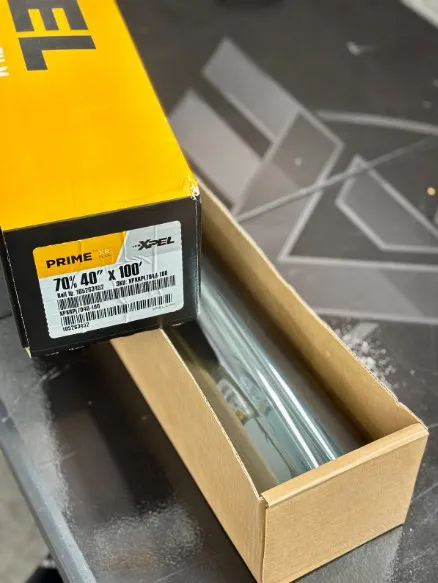
- Protection without Darkening: XPEL Prime XR Plus – 70%
Tint options with Automotive Elegance
At Automotive Elegance, we simplify the choice for “the best window tinting” by offering a meticulously curated selection of premium films, with an emphasis on advanced ceramic technologies. Our experts provide personalized consultations to understand your specific needs and priorities, ensuring you receive the optimal film type that delivers superior performance, longevity, and aligns perfectly with your driving habits and aesthetic preferences, all installed with unmatched precision and backed by robust warranties.